Every big decision in a business comes with a quiet question underneath it: can we actually afford this? A new hire, a piece of equipment, a bigger office lease — the sticker price is easy to see. What’s harder to see, without doing the math, is exactly how much additional revenue that decision requires just to break even. Most owners make these calls on gut feeling and cash on hand. A CFO makes them on a number.
That number is your break-even point, and it’s one of the simplest, most underused tools in a business owner’s financial toolkit.
What Break-Even Actually Measures
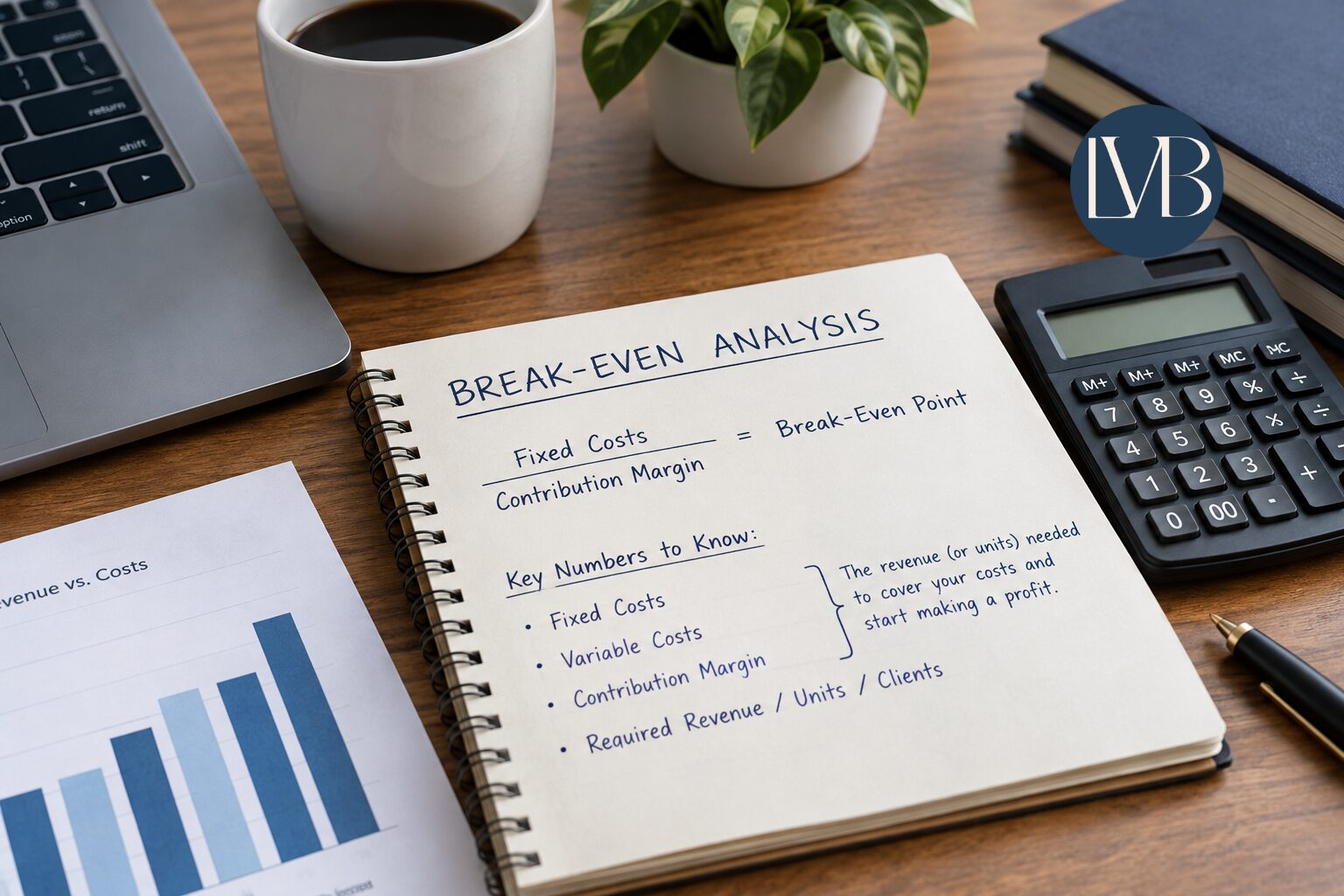
Break-even analysis answers one specific question: how much revenue do I need to generate before this decision stops costing me money and starts making me money? It’s calculated by looking at your fixed costs (the expenses that don’t change regardless of sales volume — rent, salaries, insurance) against your contribution margin (what’s left from each sale after variable costs are covered).
Divide fixed costs by contribution margin, and you get the exact revenue — or units, or clients — needed to cover the cost. Below that line, you’re operating at a loss on the decision. Above it, every additional dollar starts contributing to profit.
Why This Matters Most Before a Big Hire
Hiring is often the biggest break-even blind spot in a business. Owners look at a salary and ask, “can we afford this?” — but the real question is, “how much additional revenue or capacity does this person need to generate before they’re paying for themselves?”
A CFO runs this calculation before the offer letter goes out: total compensation cost (including taxes, benefits, and overhead — not just base salary) divided by the expected value that role creates. If a new sales hire costs $70K fully loaded, and your average deal generates $10K in gross profit, that hire needs to close roughly seven deals just to break even — before they’ve added a single dollar of profit to the business. Knowing that number changes the conversation from “can we afford it” to “what does success actually look like, and by when.”
Why This Matters Before a Big Purchase
The same logic applies to equipment, software, or a new location. A piece of equipment that costs $50K needs to either generate enough new revenue or save enough in labor and efficiency to justify itself within a reasonable timeframe. Without running the break-even number, it’s easy to justify a purchase emotionally — it looks impressive, a competitor has one, it feels like “leveling up” — without ever confirming the math supports it.
A CFO doesn’t ask “can we afford the purchase price.” They ask “what does this purchase need to produce, and by when, to be worth it.”
The Bottom Line
Break-even analysis takes the guesswork out of the biggest decisions a business makes. It won’t tell you whether to make the hire or the purchase — but it will tell you exactly what has to be true for that decision to pay off, and how far you are from that reality today. Before your next big expense, run the number. It takes fifteen minutes and can save you months of second-guessing.