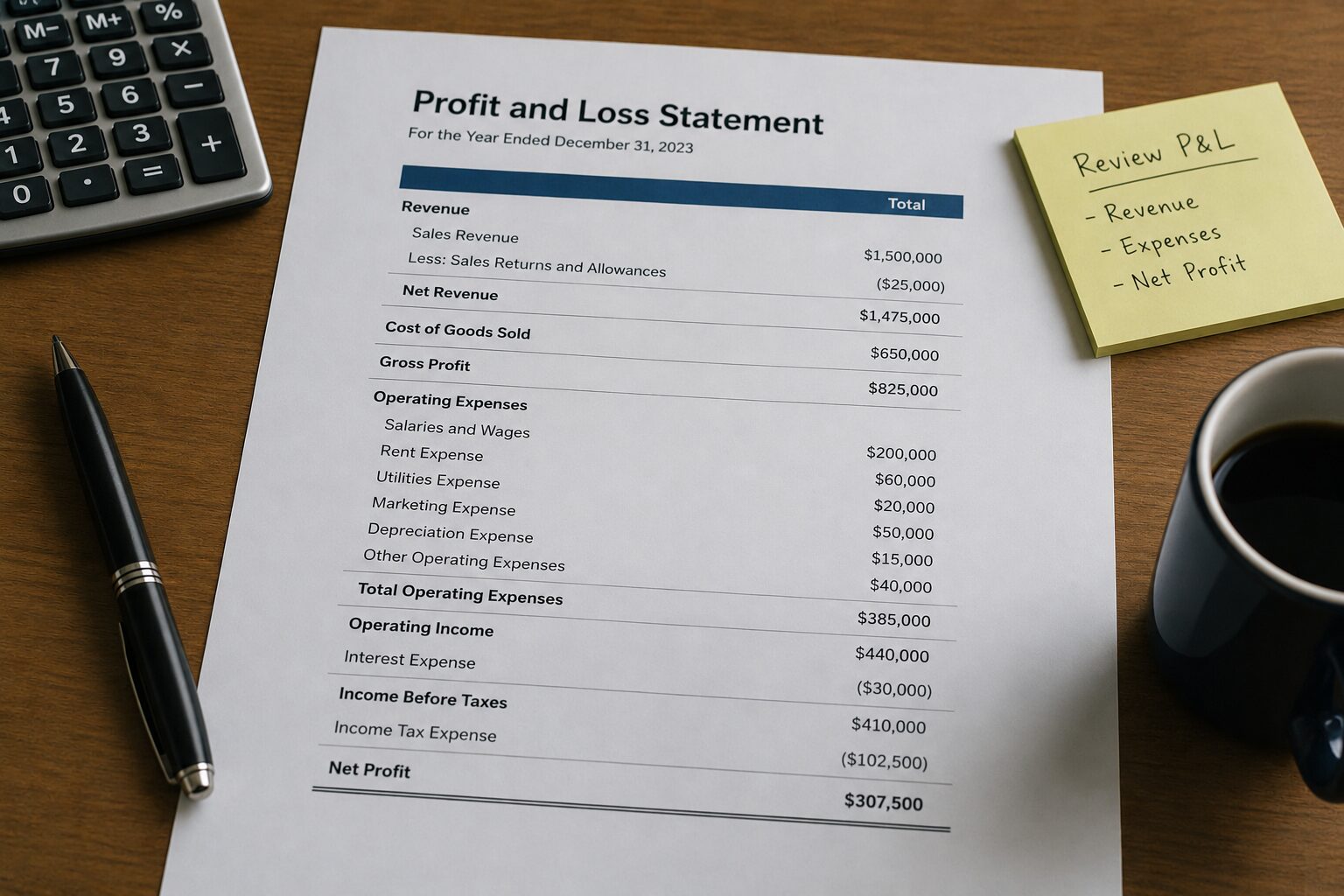

After interest, taxes, depreciation, and amortization, you arrive at net profit. This is what most people call “the bottom line.”
It matters. But here’s what a CFO knows that most business owners don’t:
Net profit on a P&L does not equal cash in your bank account.
You can show a profitable P&L and still not be able to make payroll. This happens when cash is tied up in unpaid invoices, inventory, or loan payments that don’t show up as expenses on the P&L.
This is why a CFO never looks at the P&L in isolation. They always pair it with the cash flow statement and the balance sheet. The P&L tells you if you made money. The cash flow statement tells you if you actually have it.
Profit Is an Opinion. Cash Is a Fact.
A profitable business that runs out of cash doesn’t survive long enough to enjoy its profits. This is one of the most painful lessons in business — and one of the most common. The P&L said you were doing well. The bank account told a different story.
Net profit is an important scoreboard, but it’s one panel of a three-panel dashboard. Ignore the cash flow statement and the balance sheet, and you’re making decisions with incomplete information — which is exactly how businesses that look healthy on paper end up in crisis.
A CFO reads the bottom line and immediately asks: where did that profit go, and do we actually have it? You should too. Because at the end of the day, you can’t pay your team with net income. You pay them with cash — and knowing the difference might be the most important financial lesson you ever learn as a business owner.