
Ask most business owners how they landed on their pricing, and you’ll hear some version of the same answer: they looked at what competitors charge, picked a number that felt reasonable, and moved on. It’s not a bad starting point — but it’s not a strategy either. It’s a guess dressed up as a decision. And it’s one of the most common reasons profitable-looking businesses quietly struggle to make real money.
A CFO doesn’t ask what the market will bear. They ask what the business needs to charge to be sustainably profitable — and then figure out how to position that price in the market.
Cost-Based Pricing Is the Floor, Not the Strategy
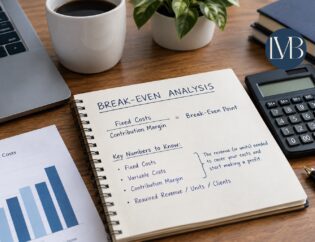
Most owners have some sense of their costs, but few actually build pricing from the ground up. A CFO starts here: what does it truly cost to deliver this product or service, including labor, materials, overhead allocation, and the time spent that never gets billed directly? That number is the floor. Price below it, and every sale loses money regardless of how busy you are. Too many businesses discover this only after a “successful” year that somehow left no profit behind.
Knowing your true cost isn’t the ceiling on your pricing — it’s the non-negotiable minimum everything else has to clear.
Competitor Pricing Tells You the Landscape, Not Your Number
Looking at what competitors charge is useful for context — it tells you what the market is used to paying and where you sit relative to alternatives. But copying a competitor’s price assumes your cost structure, overhead, and margin needs are identical to theirs. They rarely are. A competitor with lower overhead, different labor costs, or a different business model can profitably charge a price that would quietly bankrupt you. Matching their number without knowing your own is pricing blind.
Value-Based Pricing Is Where the Real Margin Lives
The businesses with the healthiest margins usually aren’t the cheapest option in the market — they’re the ones that have identified what makes them different and priced accordingly. This means understanding what a customer actually gets from working with you: speed, quality, expertise, reliability, outcomes. When pricing reflects value delivered rather than just cost plus a markup, businesses create room for healthier margins without needing to constantly chase volume to stay profitable.
This is also where a CFO looks at pricing by segment or offering — not every product or service needs to carry the same margin, and not every customer needs to be priced the same way.
Revisit Pricing on a Schedule, Not a Crisis
One of the most common pricing mistakes is only revisiting it when costs spike, or cash gets tight. By then, you’re raising prices defensively, which is a harder conversation than raising them proactively from a position of strength. A CFO builds a regular pricing review into the calendar — checking cost inputs, margin trends, and market positioning at least annually — so pricing evolves with the business instead of playing catch-up to it.
The Bottom Line
Pricing isn’t something you set once and forget. It’s a financial decision that deserves the same rigor as any other line on your P&L. Know your costs, understand the market, price for the value you deliver — and revisit it before you’re forced to. The businesses that price with intention are the ones that grow profit, not just revenue.