
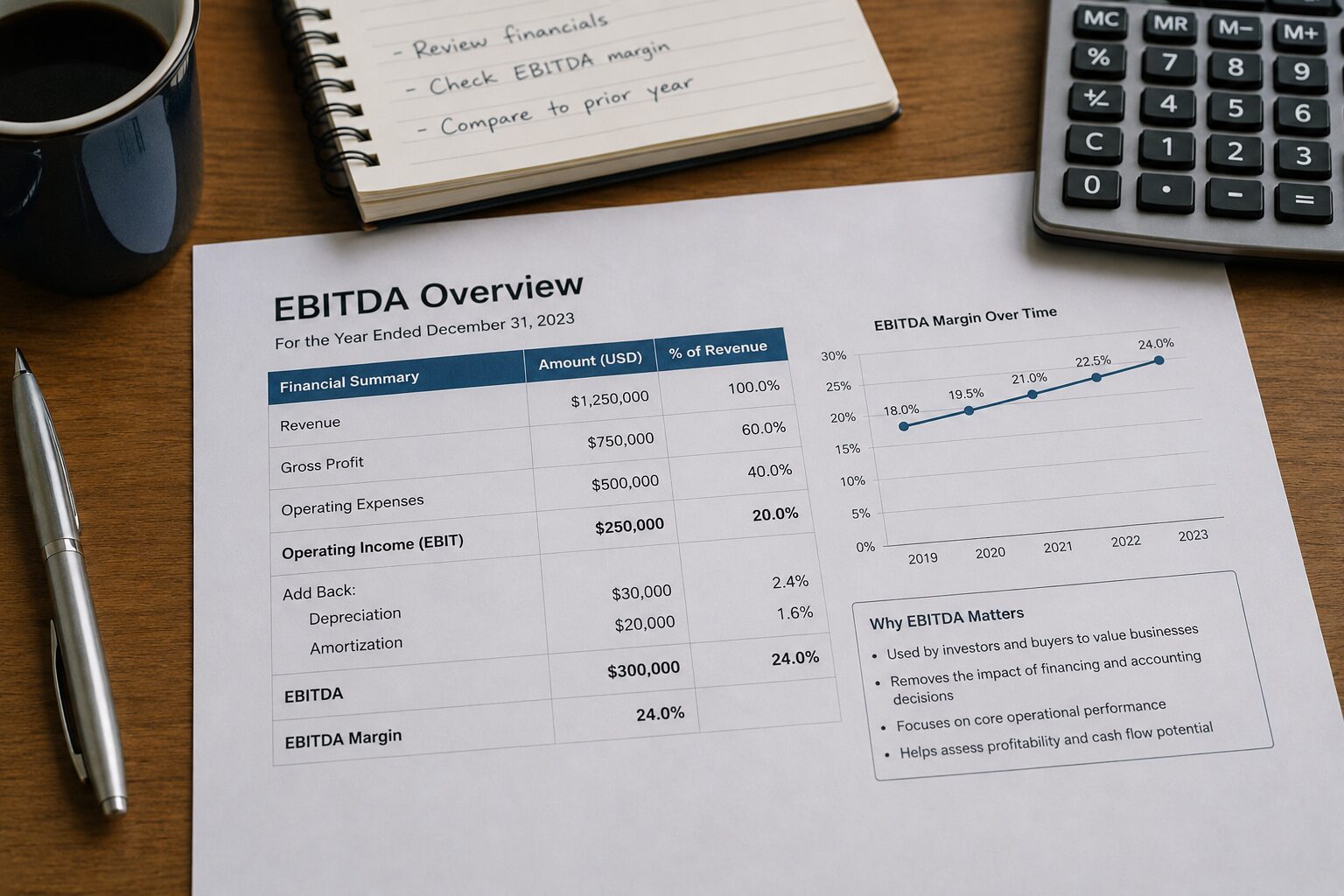

Once you subtract operating expenses from gross profit, you get your operating income also called EBIT (Earnings Before Interest and Taxes).
Add back depreciation and amortization and you get EBITDA.
This is the number that business valuations are built on. If you ever plan to sell your business, bring in investors, or take out a business loan, EBITDA is the number they will scrutinize most.
A strong EBITDA margin (EBITDA divided by revenue) signals a well-run, profitable business. Most lenders want to see consistent EBITDA before extending credit. Most buyers use a multiple of EBITDA to determine what your business is worth.
Even if you’re not planning to sell, tracking EBITDA gives you a clean, undistorted picture of your operational performance, stripped of financing decisions and accounting adjustments.
Know Your Number Before Someone Else Defines It for You
Most business owners only discover what their EBITDA means when they’re sitting across the table from a buyer, a lender, or an investor, and by then, it’s too late to improve it. The number is what it is, and the deal reflects that.
The CFOs who create the most value start tracking EBITDA long before they need to. They know that a business worth $2M today could be worth $4M in three years, not because revenue doubled, but because margins tightened, expenses were managed, and EBITDA grew consistently.
Your EBITDA is your business’s headline number to the outside world. Own it, understand it, and work on it intentionally. Because when the moment comes, whether you’re ready for it or not, that number will do the talking for you.