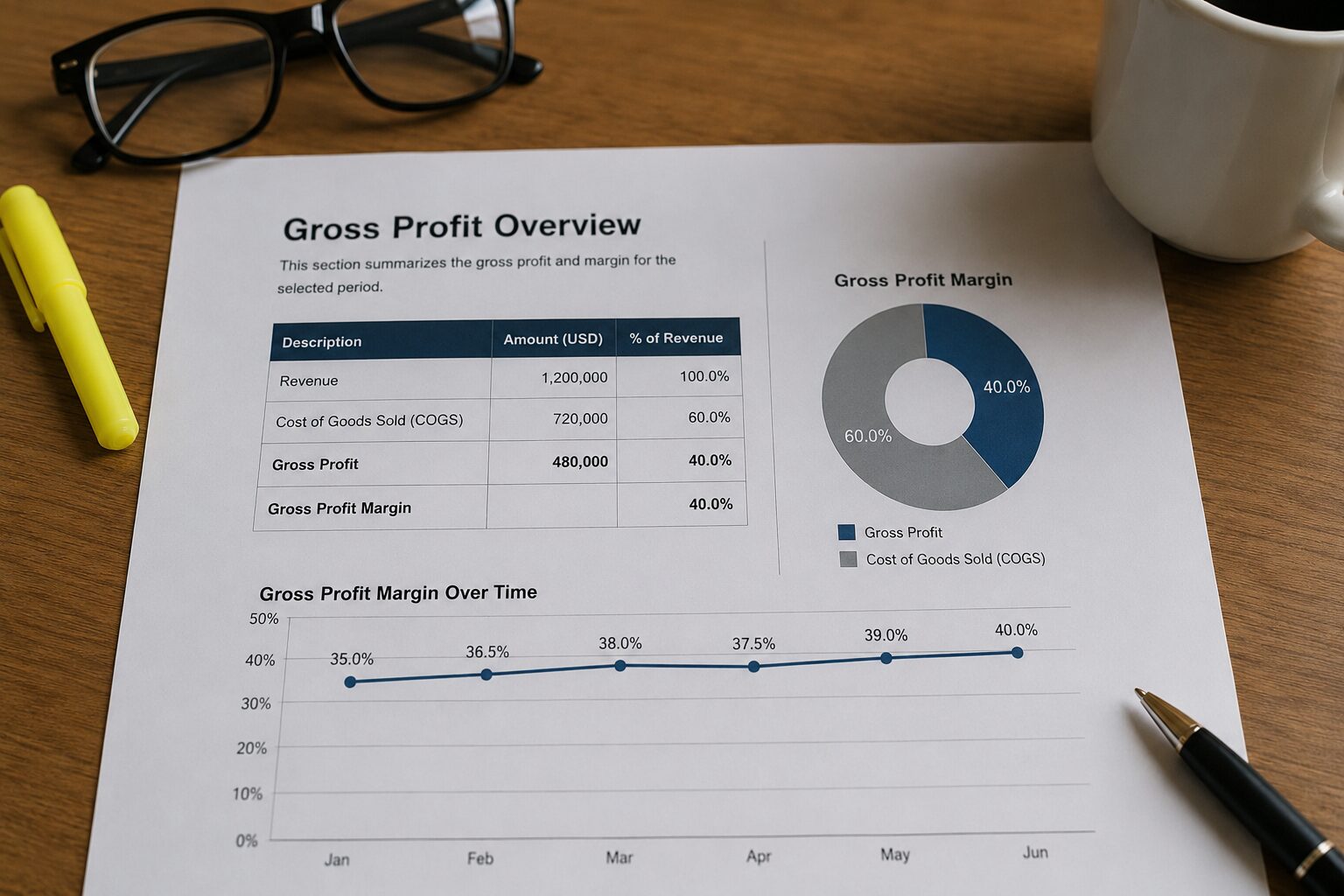
Before the year gets away from you, it’s worth pausing to look at the number that quietly determines whether your business model actually works: gross margin.
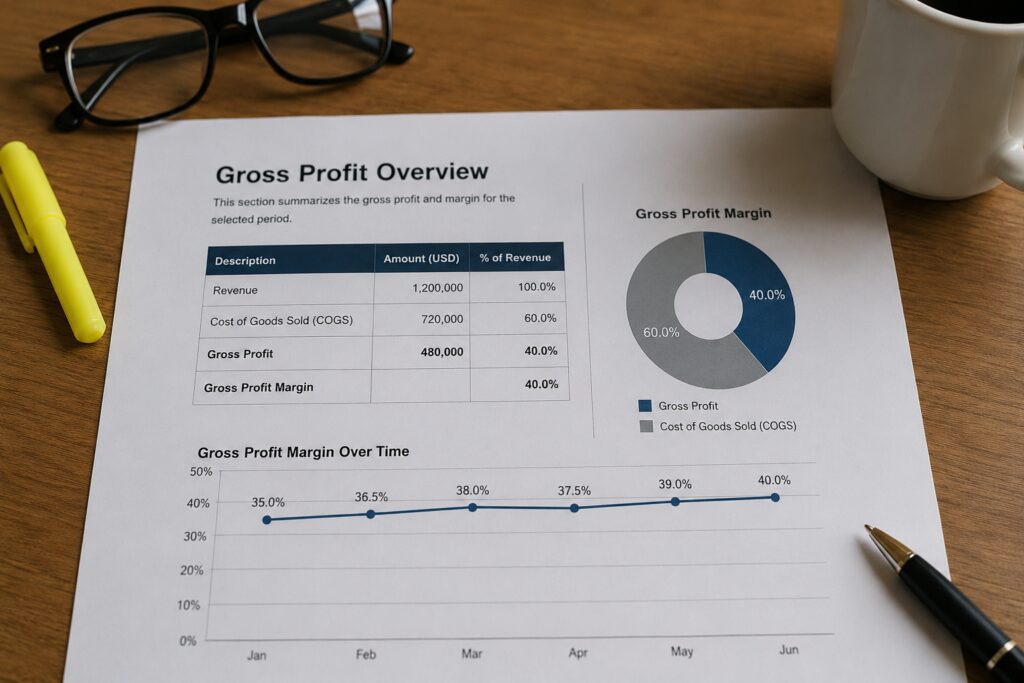
What Gross Margin Actually Measures
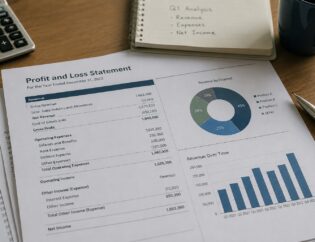
After revenue, you subtract your Cost of Goods Sold (COGS) — the direct costs tied to delivering your product or service. What’s left is your gross profit. Your gross profit margin is gross profit divided by revenue, expressed as a percentage. This number tells you how efficiently your business delivers its core product or service. A 30% gross margin means for every $1 you bring in, you keep $0.30 before covering overhead. A 70% gross margin means you keep $0.70.
Why High Revenue Can Still Be a Warning Sign
Here’s what most business owners don’t realize: a high revenue number with a low gross margin is a warning sign, not a success. If you’re generating $1M in revenue but your gross margin is only 15%, you’re working incredibly hard for very little. A business doing $400K with a 60% gross margin is often in a much stronger position. A CFO benchmarks gross margin against industry averages and watches whether it’s trending up or down month over month. If your margin is shrinking, your costs are growing faster than your pricing — and that’s a problem you need to fix immediately.
Gross Margin Is Your Business Model in a Single Number
If your gross margin is healthy and growing, your core business works — you have something worth scaling. If it’s thin or shrinking, no amount of revenue growth will save you. You’ll just be running faster on a treadmill that’s slowly speeding up. This is why a CFO watches gross margin more closely than almost any other metric. It’s not about what you made — it’s about what you kept after doing the work. And what you kept is what pays your team, funds your growth, and ultimately determines whether this business is worth owning. Before you chase more revenue, know your margin. Because more sales with a broken margin doesn’t build a business — it builds a bigger problem.