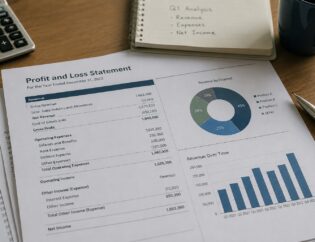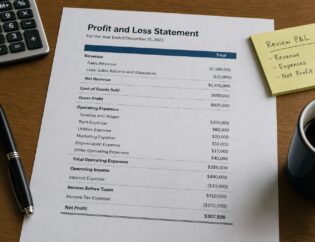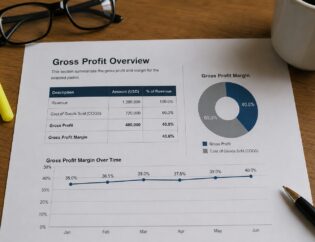
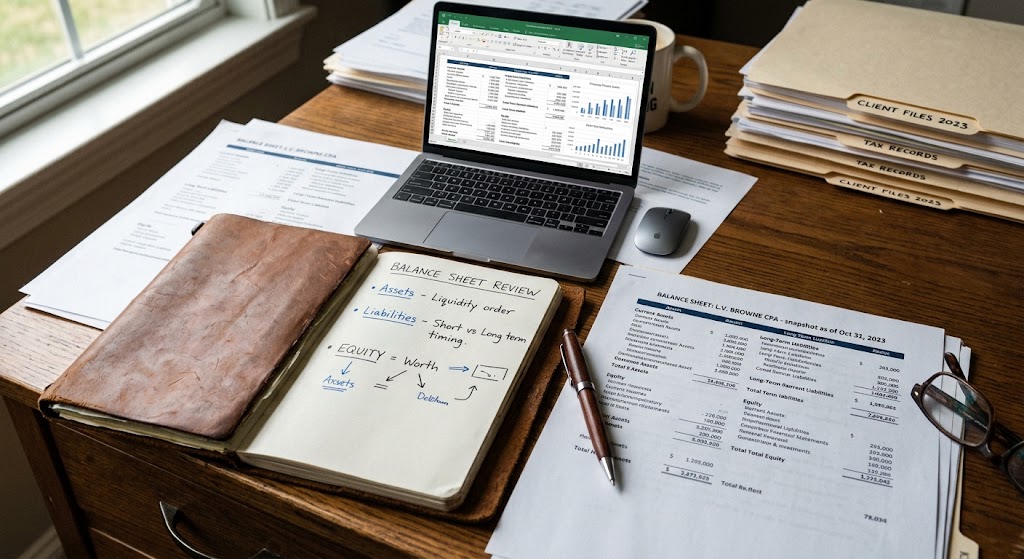
Most business owners live in their P&L. It’s the report that shows up first, feels the most intuitive, and answers the question everyone wants answered: did I make money? But the P&L only tells you about a single window of time — a month, a quarter, a year. It doesn’t tell you what your business actually owns, what it owes, or what it’s really worth at this exact moment. That’s the balance sheet’s job, and it’s the report most owners glance at last, if they look at it at all.
A CFO reads the balance sheet the way a doctor reads a full set of vitals, not just one symptom. It’s a snapshot of financial health at a single point in time — and it often reveals problems the P&L never will.
Assets Aren’t Just “What You Own” — They’re a Story About Liquidity
Your balance sheet lists assets in order of liquidity — how quickly something can be turned into cash. Cash itself sits at the top. Then accounts receivable, inventory, equipment, and finally long-term assets like property. A CFO doesn’t just total these up — they ask how much of your asset base is actually accessible if you needed cash fast.
A business with $500K in “assets” that’s mostly aging inventory and slow-paying receivables is in a very different position than one with $500K split between cash and equipment. The total looks identical. The reality isn’t.
Liabilities Tell You What’s Coming, Not Just What’s Owed
Liabilities are everything your business owes — but the real insight is in the timing. Current liabilities (due within a year) behave very differently than long-term liabilities (a five-year loan, for example). A CFO separates these immediately, because a mountain of short-term obligations coming due in the next 90 days is a far more urgent problem than a long-term loan with predictable payments stretched over years.
This is also where a CFO checks for something owners often miss: are liabilities growing faster than assets? If they are, the business is quietly leaning more on debt to stay afloat — even if revenue looks fine on the P&L.
Net Worth Isn’t a P&L Number — It’s a Balance Sheet Number
Subtract total liabilities from total assets and you get equity — what the business is actually worth on paper. This is the number that matters most to lenders, buyers, and investors, because it reflects accumulated financial reality, not just one good (or bad) period. A business can post a profitable year and still see equity barely move, if that profit went straight to paying down debt or got tied up in inventory. Equity tells you the truth over time in a way a single P&L never can.
The Bottom Line
Your P&L tells you if you made money. Your balance sheet tells you what that money — and everything else — actually adds up to right now. A CFO never reads one without the other, because together they show the full picture: performance and position. If you’ve never pulled up your balance sheet and actually read it line by line, that’s the next 15 minutes worth spending on your business.